
Frustration is data.
The Challenge
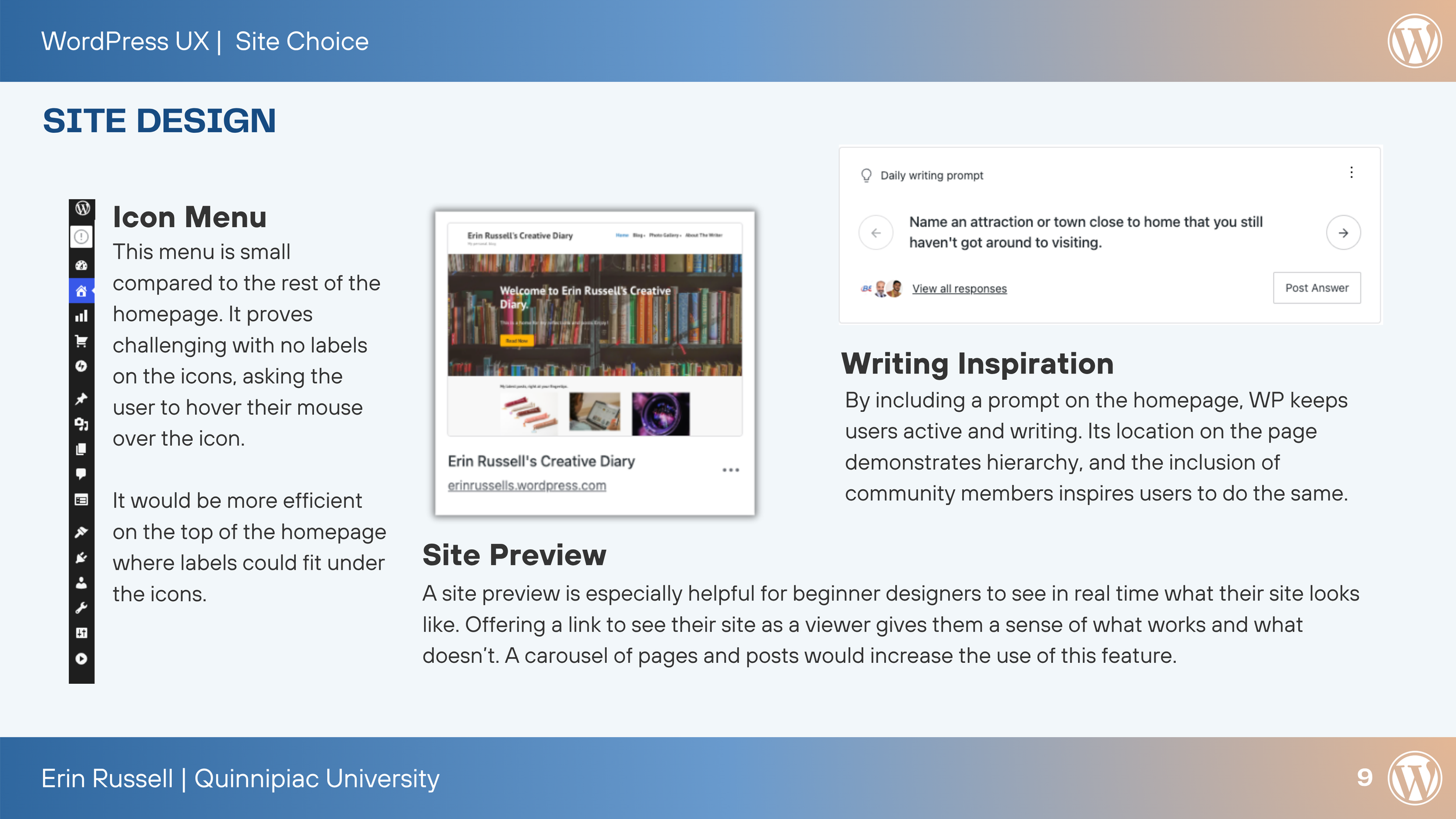
WordPress.com is central to my graduate program, yet its homepage navigation is a persistent source of friction. The left-hand menu packs seventeen unlabeled icons into a narrow column, demanding recall instead of recognition and failing to match how users actually think about their work.
My goal: evaluate the site as a UX researcher would and become one in the process, having had no prior hands-on research experience.
The Solution
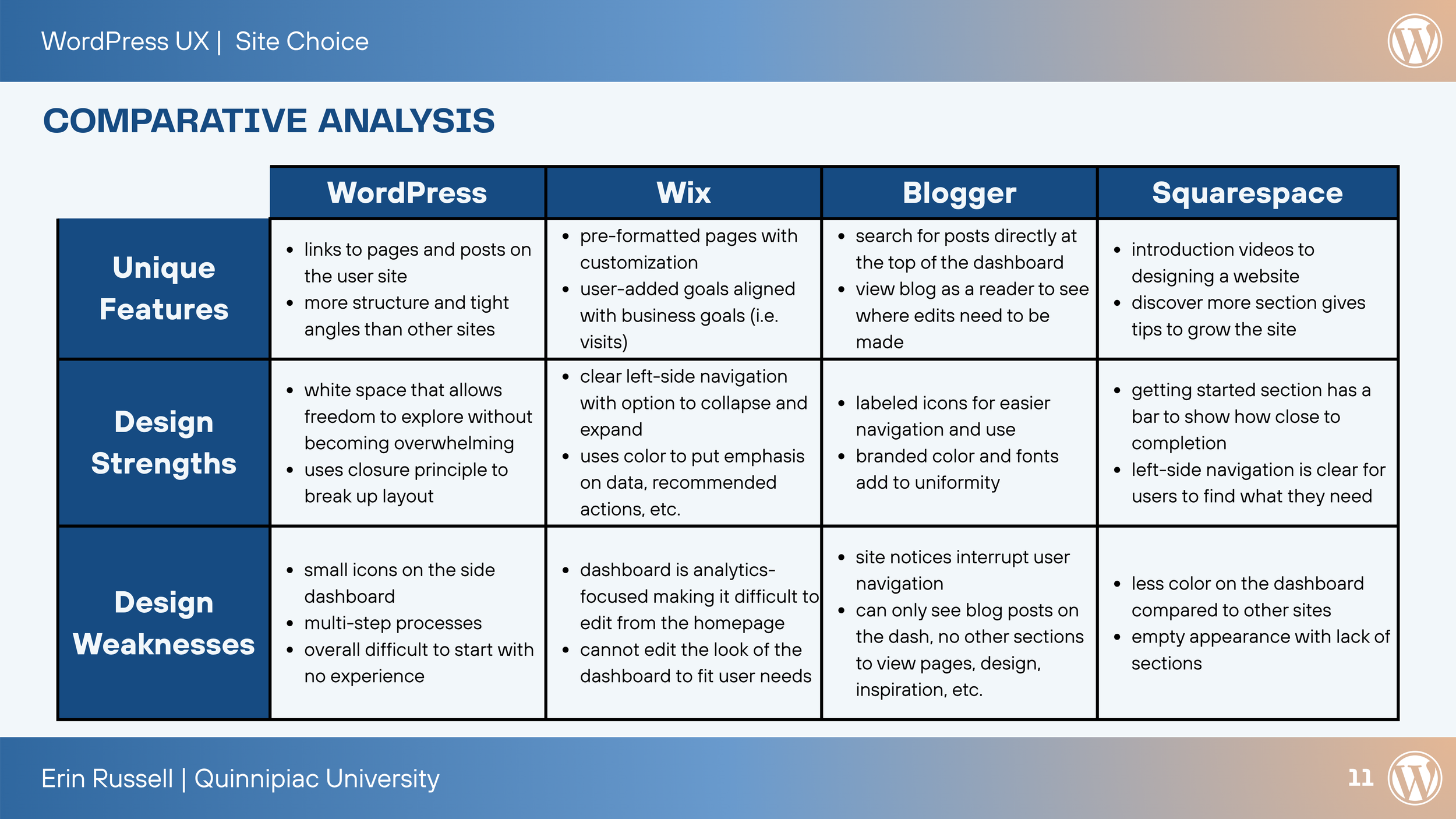
Rather than rely on a single method, I designed a mixed-methods research plan that would triangulate findings across qualitative and quantitative data. Each method was chosen to answer a different kind of question about the homepage, and together they produced a layered, defensible picture of where the interface was failing users.
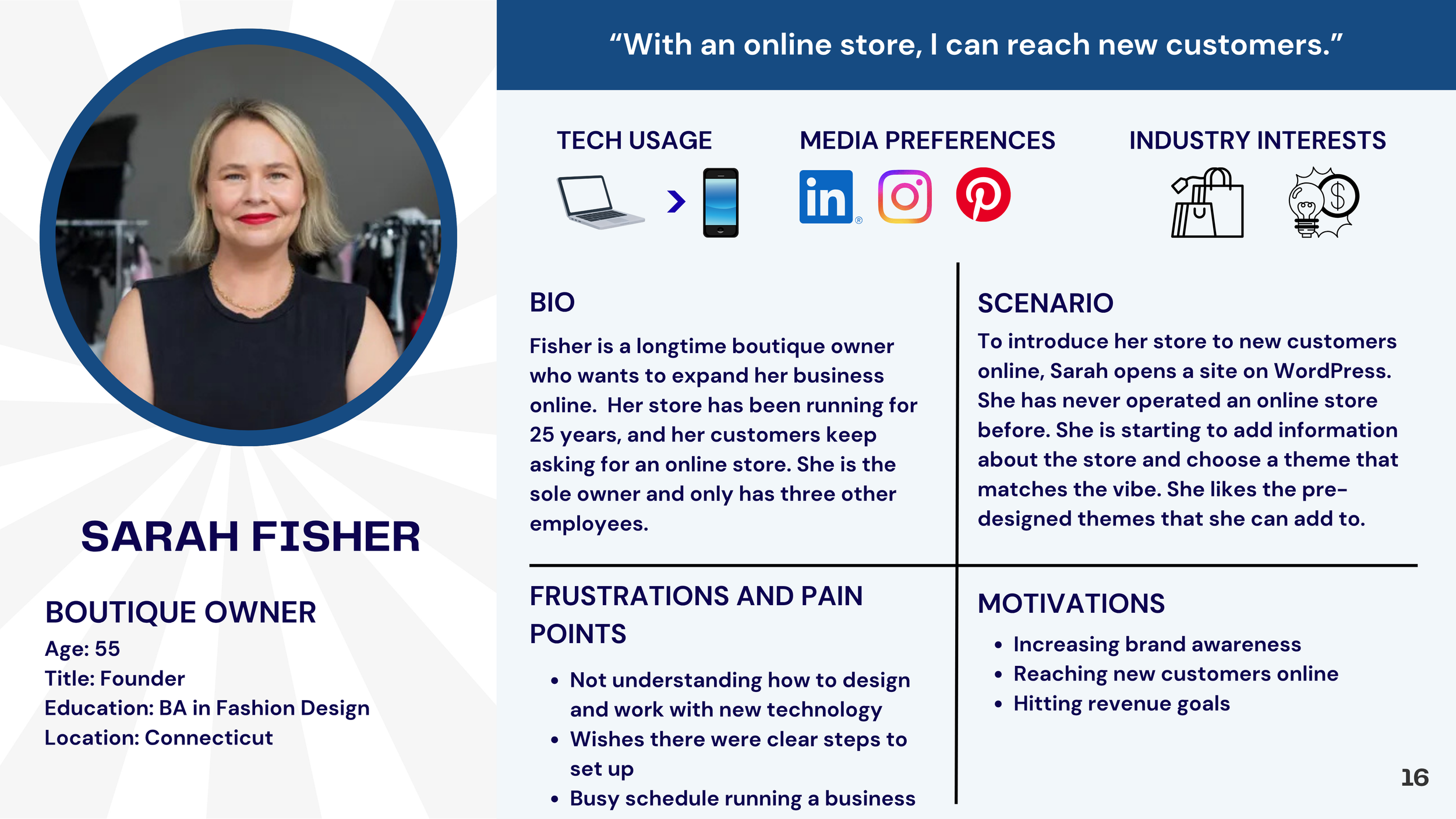
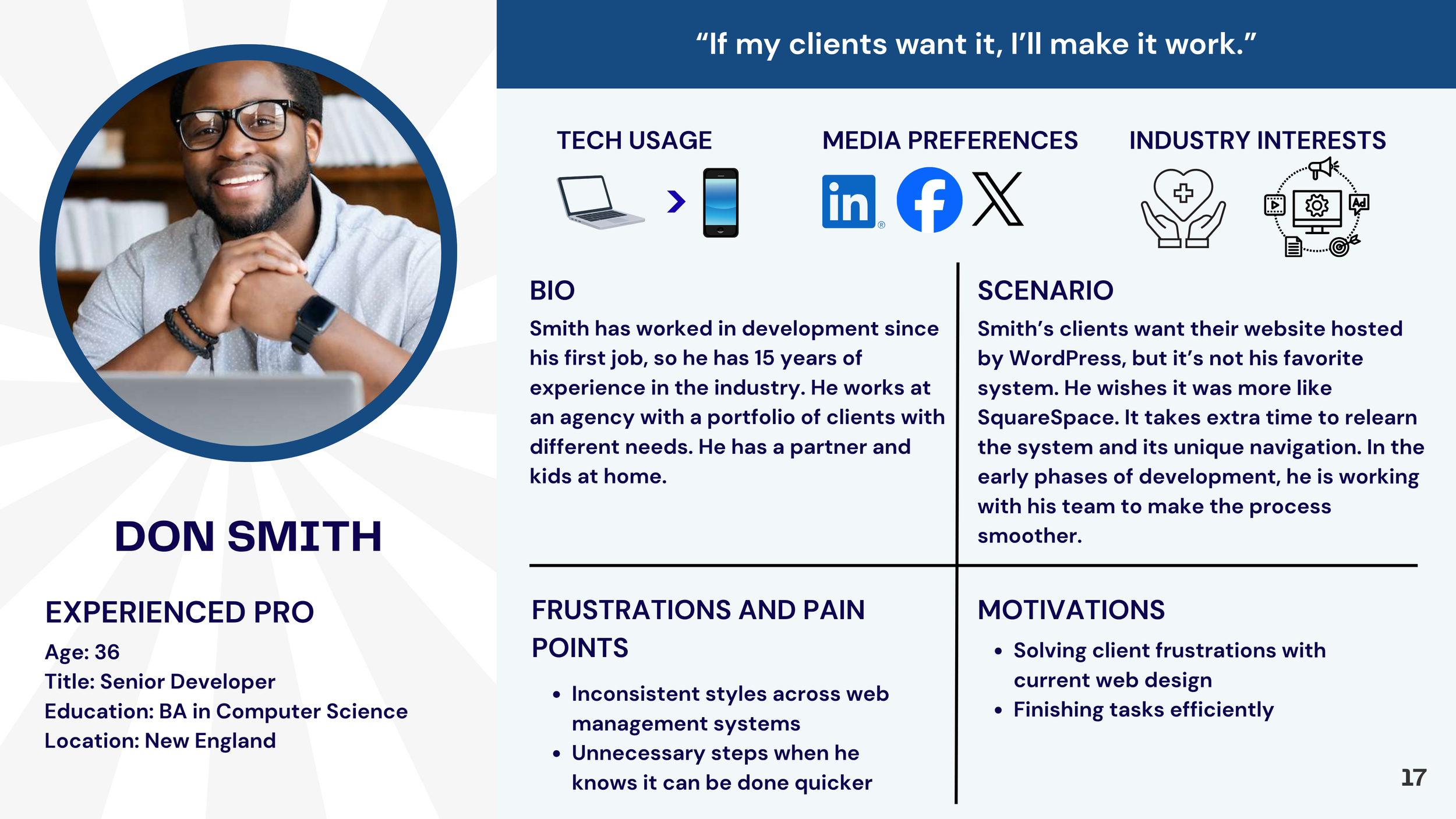
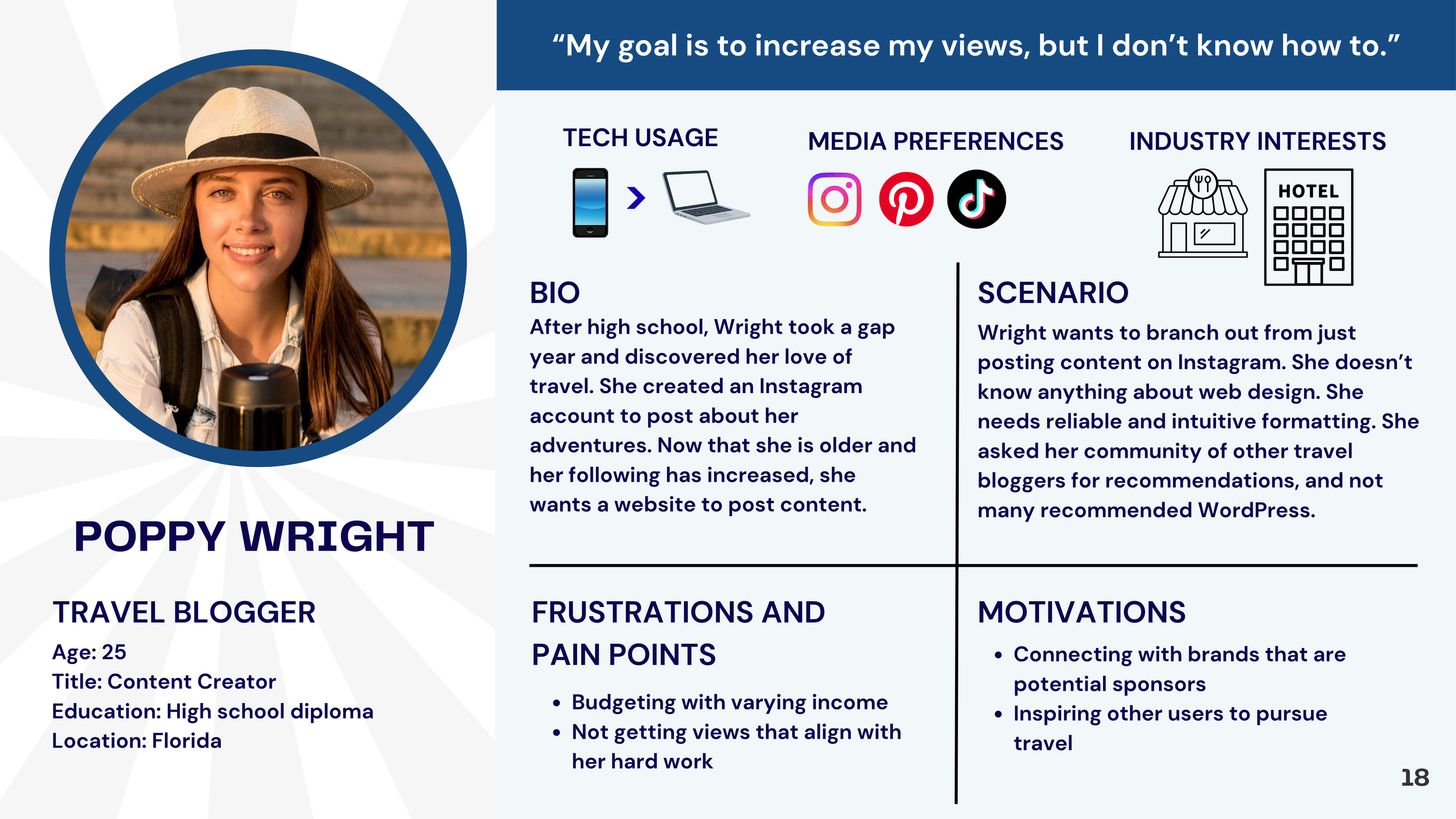
Before collecting any data, I developed three user personas to anchor the work in realistic needs. These personas shaped every subsequent method and kept recommendations tied to real human needs rather than abstract heuristics.
Methods
Interviews: I drafted a full interview protocol covering introduction, warm-up, body, cooling-off, and wrap-up phases, with open-ended questions about users' decision criteria for a web management system, their emotional experience with WordPress, and their reactions to the left-side navigation specifically.
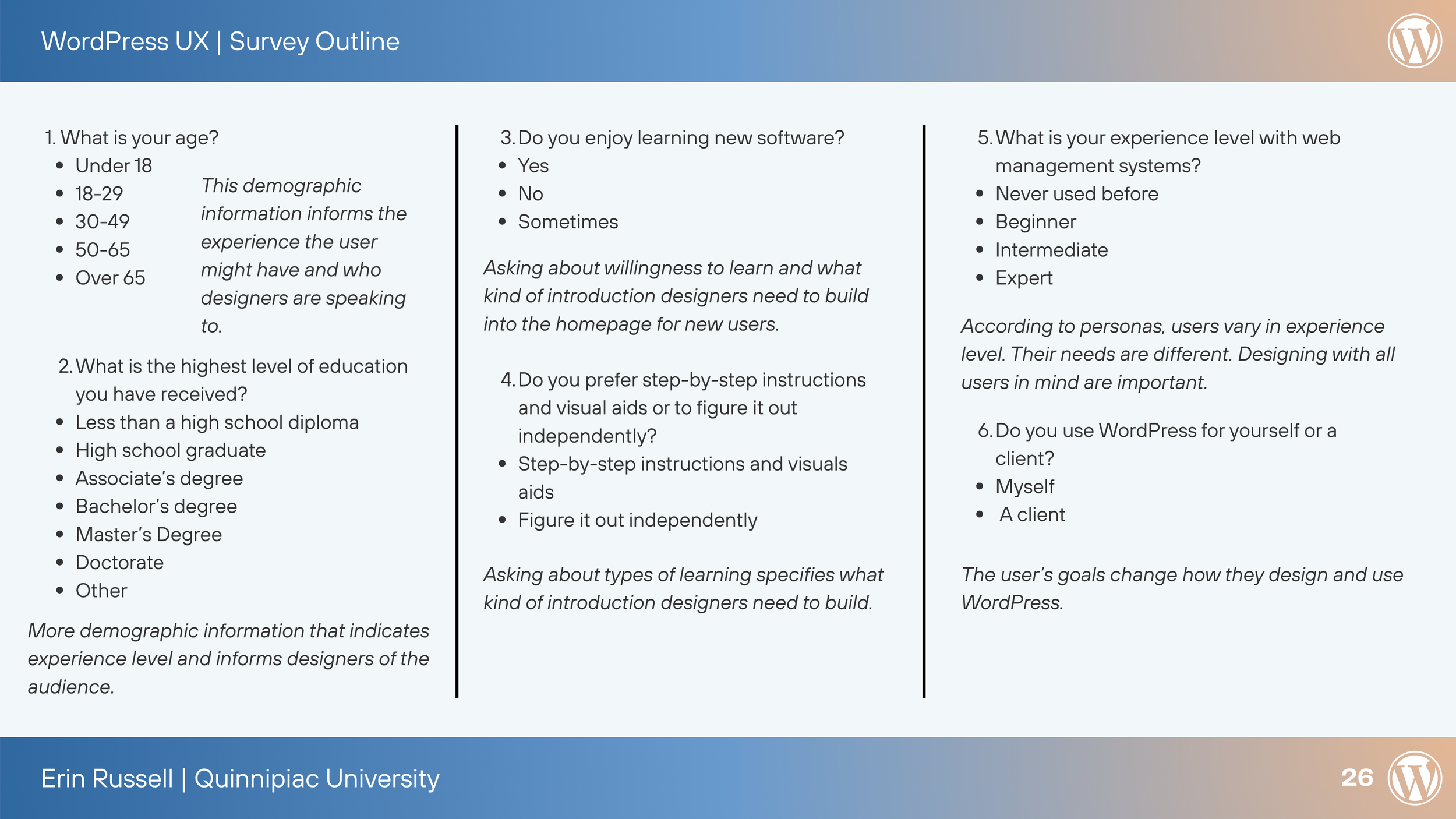
Surveys: I authored a 21-question survey in Google Forms combining demographic, behavioral, and preference items to complement the qualitative interview data with scaleable, quantitative signal.
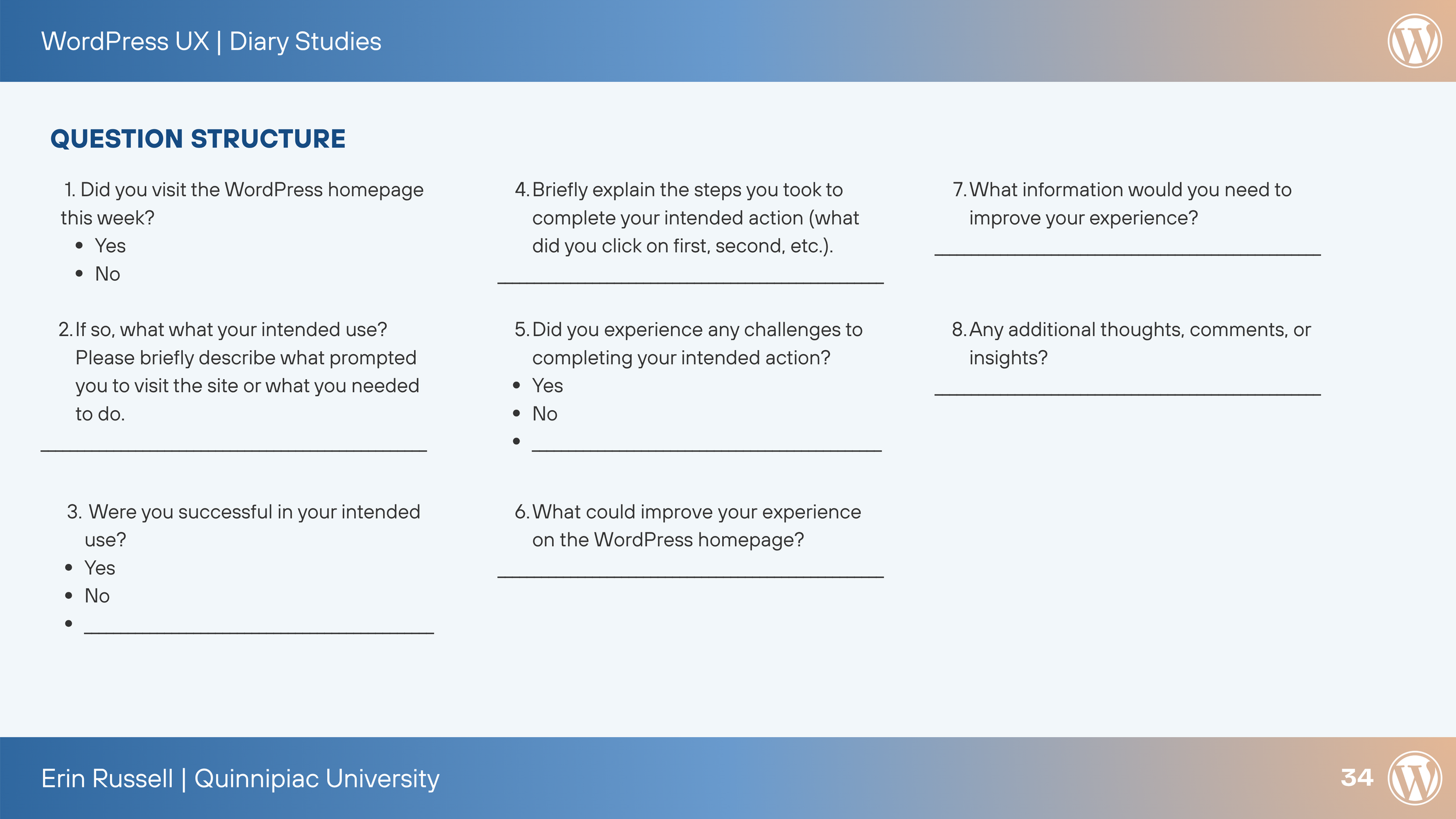
Diary Study Proposal: I designed a three-month weekly email-based diary study for active WordPress users, including study goals, recruitment criteria, instructions, incentives, and an eight-item weekly question structure for capturing longitudinal behavior.
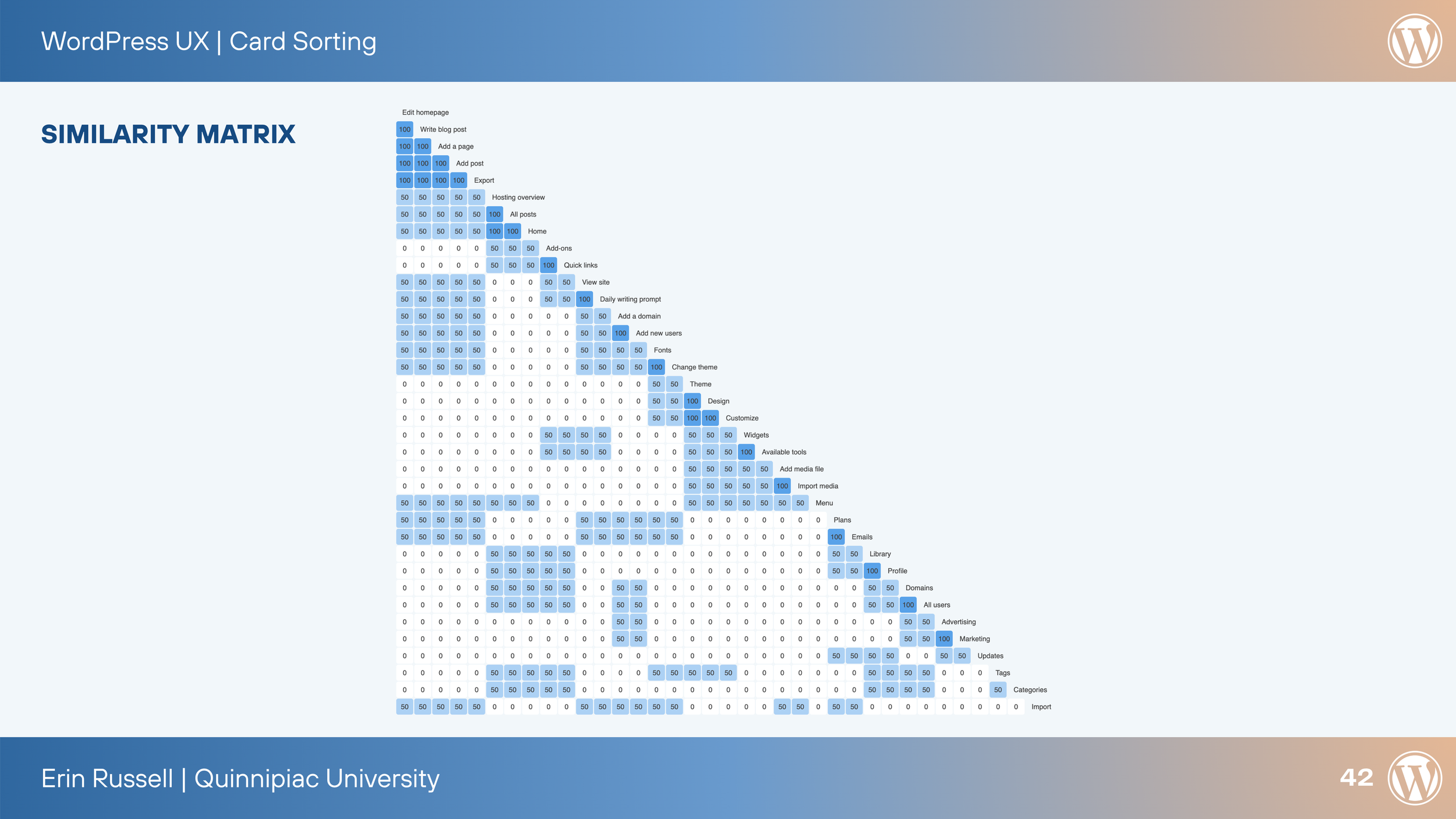
Card Sort: I ran an open card sort in Optimal Workshop using 36 cards pulled from the WordPress homepage: menu items, sub-menu entries, and key actions. The study revealed how users mentally categorize the platform's content.
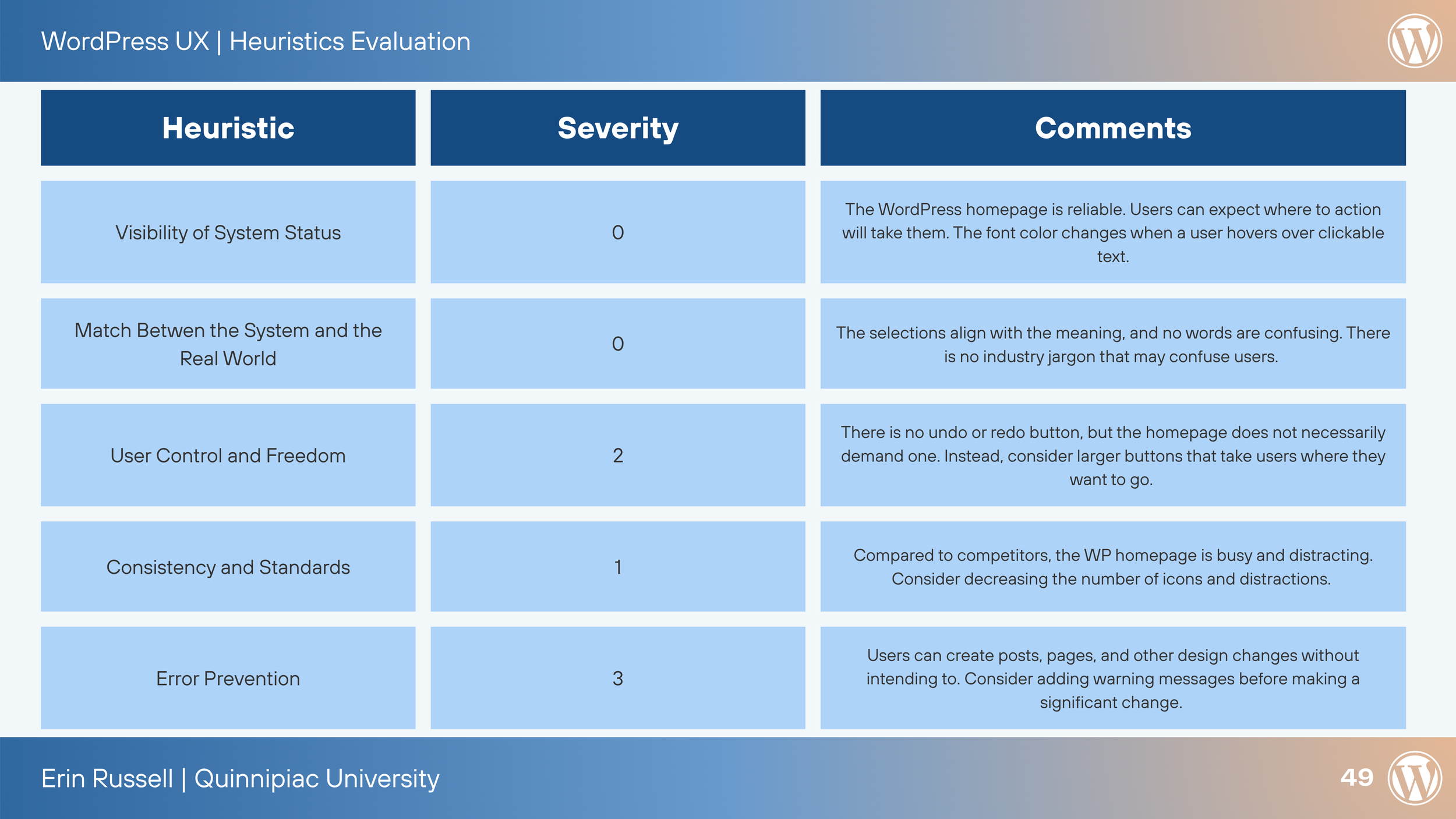
Heuristic Evaluation: I evaluated the homepage against Nielsen's ten usability heuristics, assigning severity ratings from 0 to 4 and documenting specific instances of each issue.
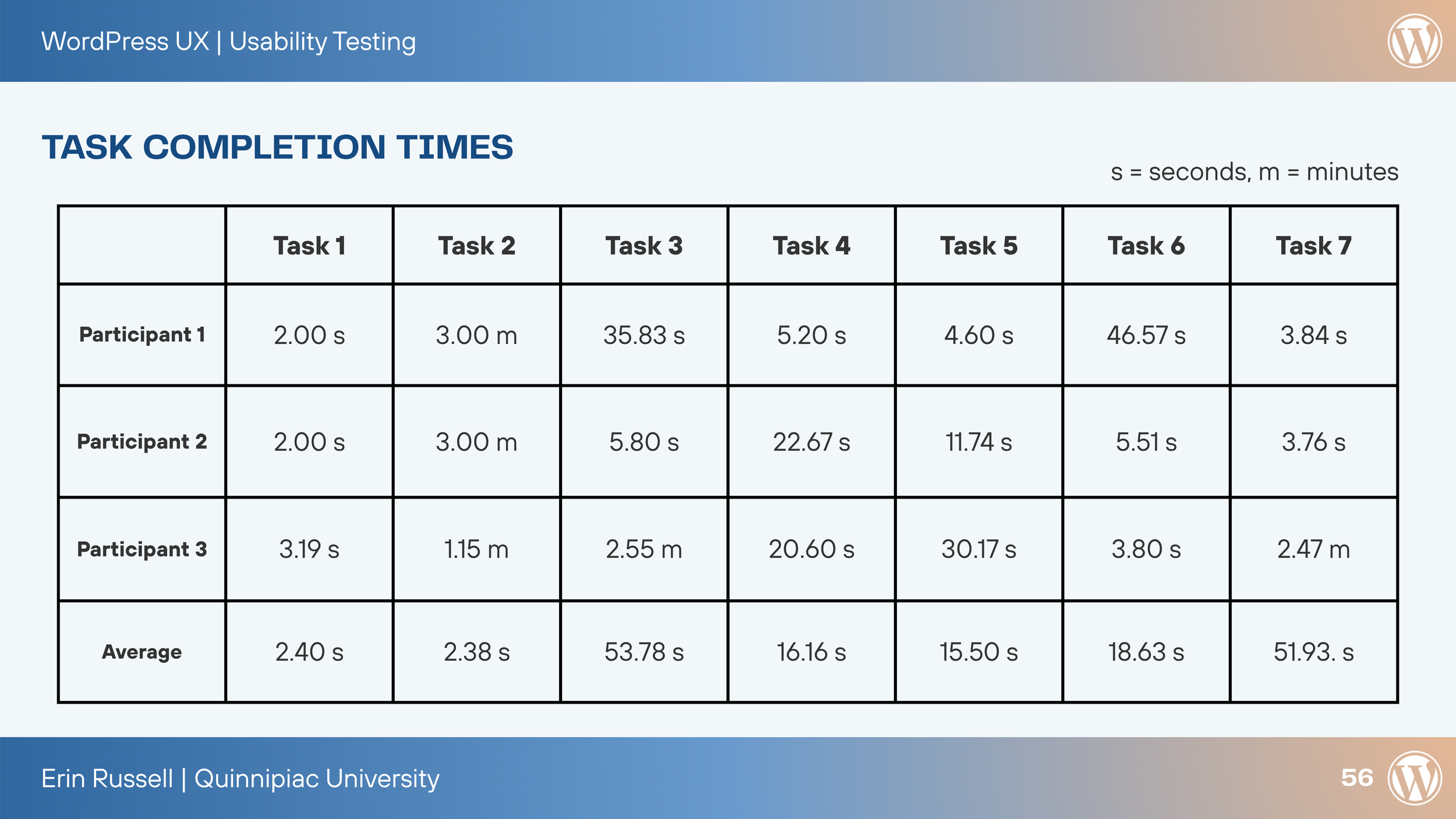
Moderated Usability Test: I designed a seven-task, think-aloud usability test, wrote the consent form and moderator script, recruited three participants, recorded each session, and timed every task.
Synthesis
The real work of the project happened after data collection. I looked across all six methods for convergent themes rather than treating each study in isolation. Three findings surfaced repeatedly and became the backbone of the final recommendations:
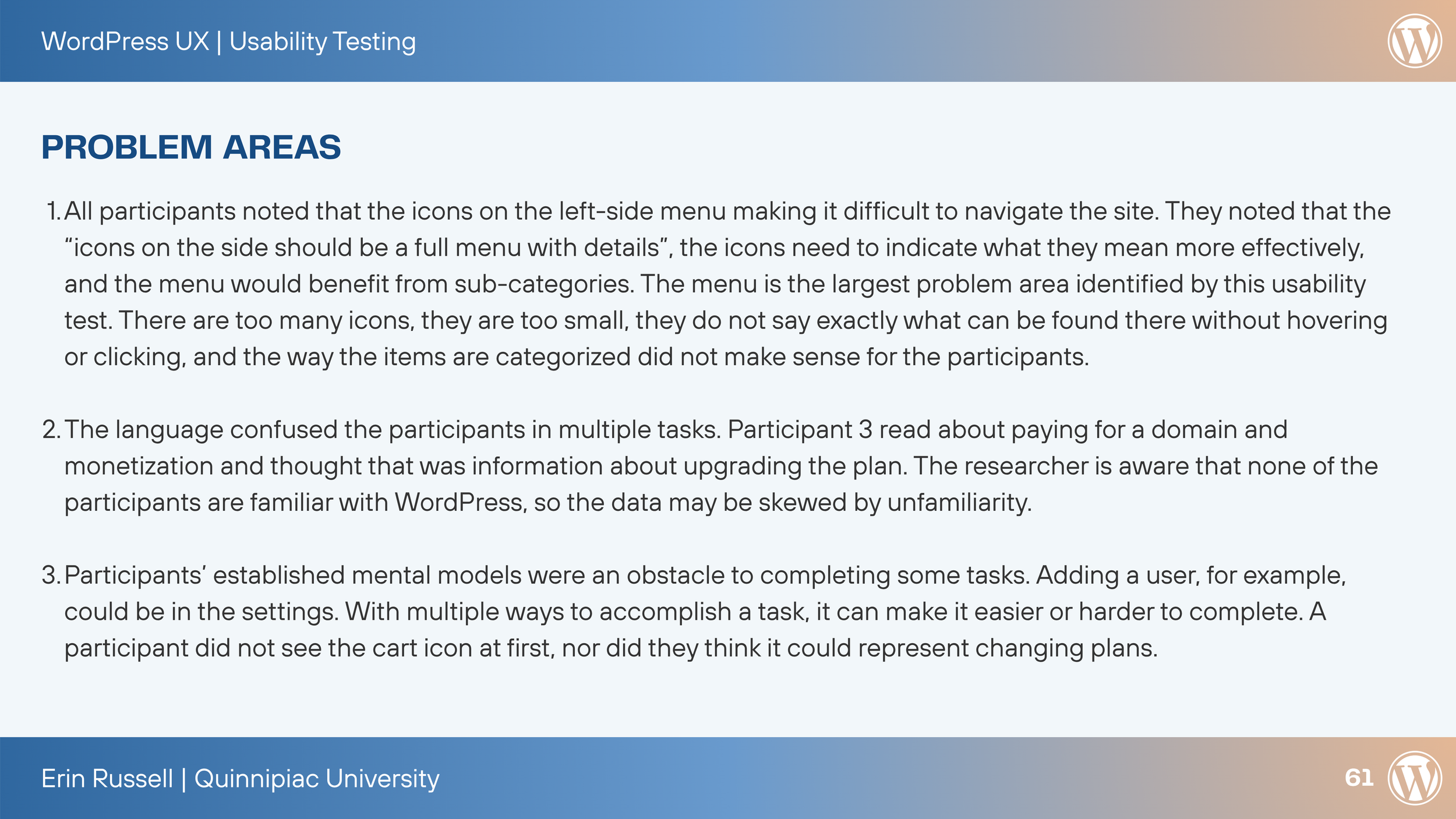
Icons fail the recognition test: In the heuristic evaluation, “Recognition rather than Recall” scored a 4 (catastrophic). Usability test participants confirmed it: all three said the unlabeled icons were the primary barrier to navigating the site, and one called the menu a “barrier of entry” for new users.
Information architecture does not match user mental models: The card sort produced wildly different category structures across participants.
Density creates cognitive load: The heuristic evaluation, interviews, and usability test all independently flagged the sheer number of icons as distracting. Participants reported trial-and-error navigation rather than confident, goal-driven flow.
The Outcome
The most significant outcome is my own transformation, from no applied UX experience to a working researcher's toolkit.
UX research methods, end-to-end: Designed and ran interviews, surveys, a diary study, a card sort, a heuristic evaluation, and a moderated usability test.
Synthesis & analysis: Turned mixed-methods data into a prioritized, evidence-backed set of recommendations.
Professional growth & confidence: I can now scope a research plan, run the studies, and present findings that connect user voice to product decisions. I know UX research, and I can take on UX projects.