
You can’t rush a good brew, or a good campaign.
The Challenge
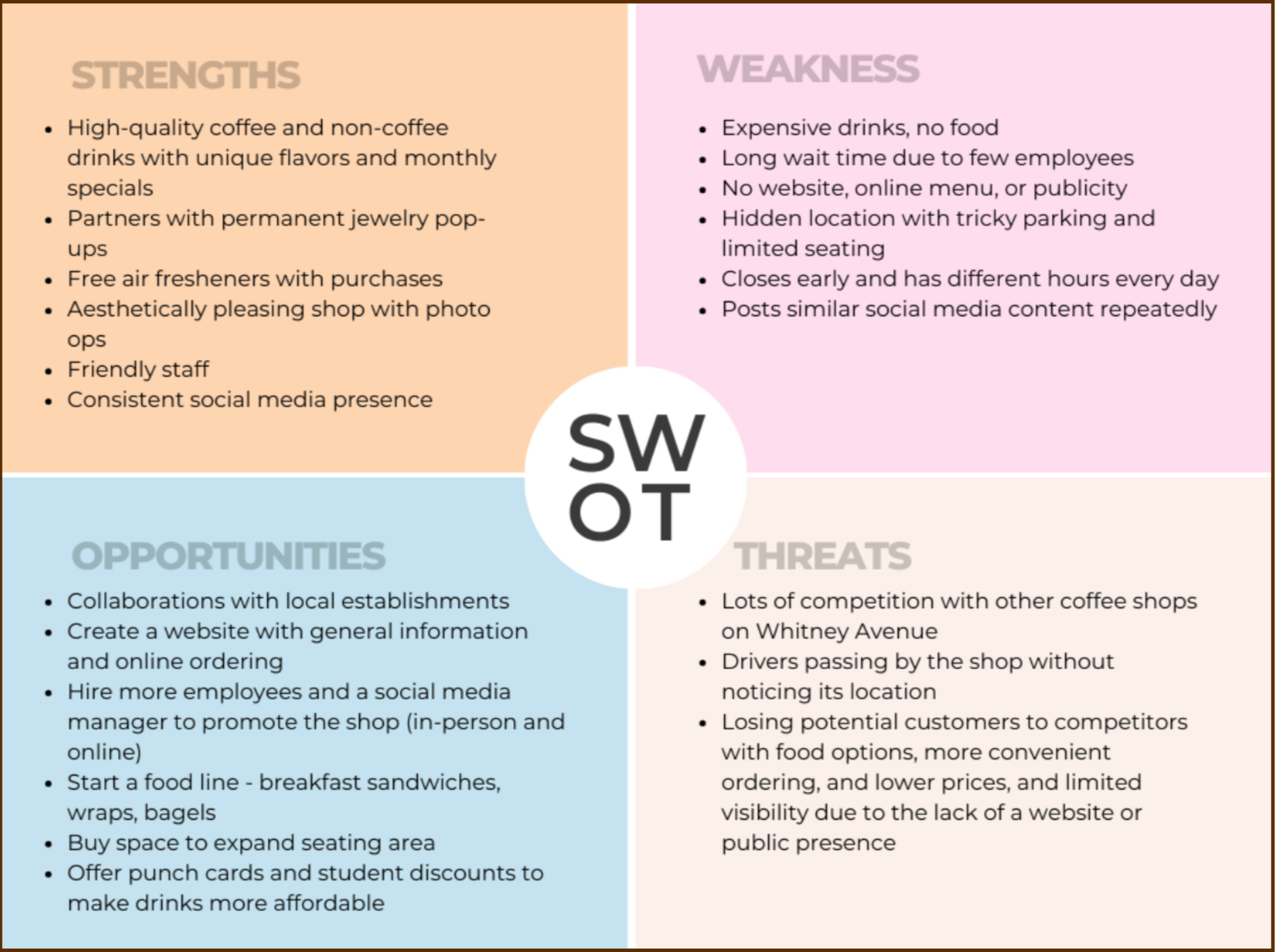
Latte Soul is an independent coffee shop on Whitney Avenue in Hamden, Connecticut, owned by Shelena Cruz, a former paralegal who turned a personal hobby into a storefront rooted in her identity as a feminist entrepreneur. When the team took on Latte Soul as the client for their senior capstone, the shop had been open just months and faced a clear business problem: it was missing the student customers who lived and studied only minutes away.
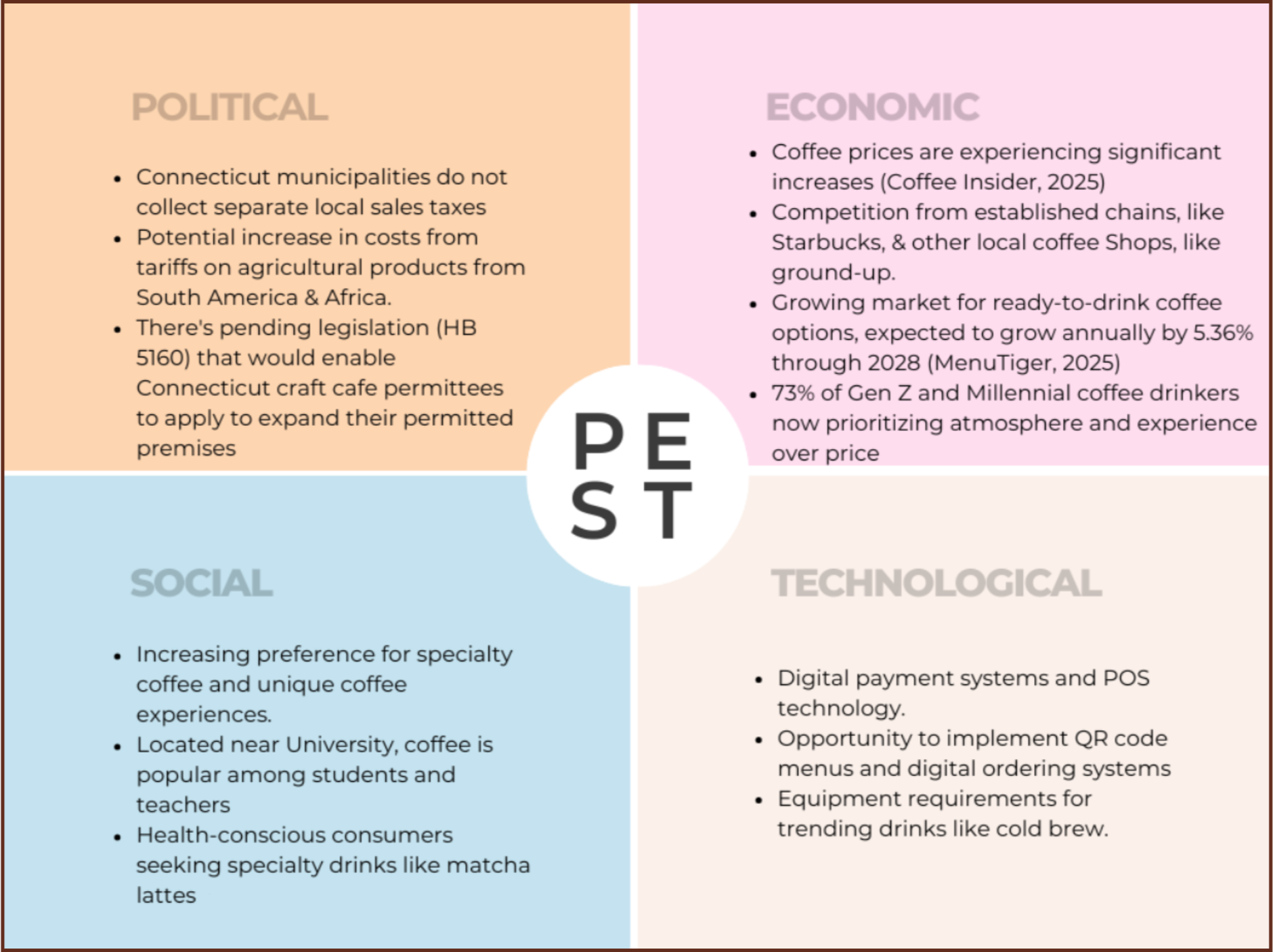
Cruz wanted to grow Latte Soul’s presence with the Quinnipiac University community, but the shop had no website, no online menu, inconsistent hours, and social media content that rarely traveled beyond its existing followers. It also sat in a visually quiet plaza, partially hidden from the road, in an increasingly crowded Hamden coffee market that included Dunkin’, Starbucks, Funcle’s Cafe, Ground Up, Common Grounds, and Whitney Donut. Rising Arabica futures, which had climbed roughly 70% in 2024 and set an all-time high in early 2025, added cost pressure that made it even more important for Latte Soul to build a loyal, repeat audience rather than rely on casual foot traffic.
The client’s goal was simple on paper and complicated in practice: turn Quinnipiac students into regulars.
The Solution
The team approached the project like a full agency engagement, conducting primary research through a survey of Quinnipiac students. The survey reframed the problem — with only 45% of respondents having visited Latte Soul, the core issue was awareness, not retention. Key findings showed students discover coffee shops mainly through word of mouth (58%) and social media (42%), and would visit more often for student promotions (43%) and dedicated student nights (34%).
These insights shaped a strategy around three objectives, due May 2026:
Increase social media engagement by 10%
Grow digital awareness by 20%
Establish partnerships with three Hamden businesses
Tactics included a new Squarespace website, consistent TikTok posting, co-branded content with regional food accounts, micro-influencer partnerships, and a sampling activation with Quinnipiac RecWell. A twelve-month calendar layered in seasonal launches, holiday promotions, and cross-promotions with neighboring businesses.
The team developed a detailed budget and an evaluation plan using platform analytics, website metrics, and a follow-up survey to track impact on awareness.
The Outcome
The team presented a completed, client-ready campaign plan to Shelena Cruz — including strategy, tactics, timeline, budget, evaluation plan, and sample materials. More than a classroom exercise, it was built from primary research for a real small business with real constraints.
Working with a live client and within a five-person team required adapting to someone else's brand, dividing responsibilities, and integrating individual work into a cohesive plan — mirroring the demands of professional PR work.