
Designing Perception: How Emotion Shapes Brand Identity in the Experience Economy
In today’s experience-driven economy, the value of a product is no longer defined solely by its function or price. It’s measured by how it makes people feel. Values and morals contribute to consumers’ decisions and behaviors, making brands responsible for how they act, not just what they sell. The emotional experience of a good or service determines its cultural relevance and business success.
Designers are the key to brand identity and expression. When executed well, design sparks emotion without words. There is a relationship between what designers intend to create and how consumers react.
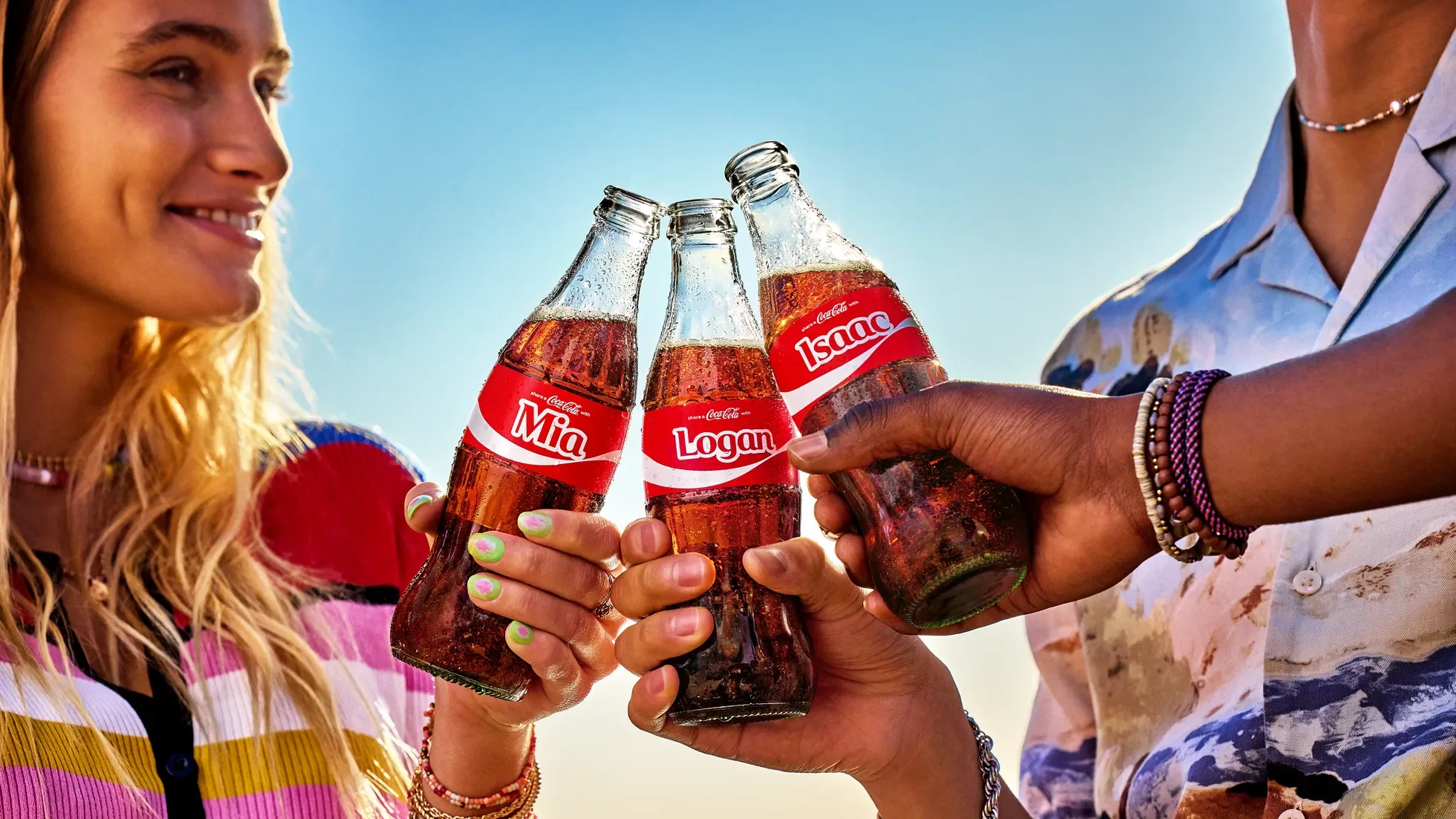
One well-known example is Coca-Cola’s “Share a Coke” campaign. The brand replaced its name on its labels with common first names and phrases. The new cans promoted friendship and camaraderie, two things that became associated with Coke. The design followed the brand’s guidelines and can recognition, and it represented the brand identity of joy and comfort. When thinking about a drink that most people enjoy, Coke comes to mind.
What is “Experience Economy”?
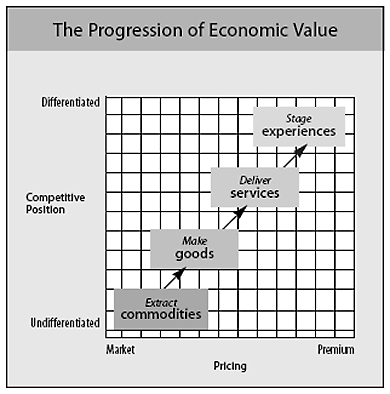
Business theorists B. Joseph Pine II and James Gilmore coined the term “experience economy” to describe the shift from goods and services to experiences as the driver of economic value (Pine & Gilmore, 1998). Consumers don’t simply buy products anymore; they buy into the stories, feelings, and meanings that reflect their own goals.
In the chart, “The Progression of Economic Value”, experiences sit as differentiated in competitive positioning and premium pricing. From commodities to goods, to services, to experiences, the personalization and pricing increase with each progression. Consumers want something unique, including the feeling they get when they experience it. They are willing to pay more if treated specially.
This shift has made emotional branding essential. While logos and slogans are still a successful tactic, brands are defined by the emotions they evoke and the identities they help shape. In many modern companies, design isn’t an accessory to business strategies. Rather, it is the strategy. It conveys the values and emotions that users connect with at a subconscious level.
Crafting Emotional Intent
Designers wear another hat: emotional architects. Not only are they required to make things look good, but they also have to be purposeful with brand elements. Each design choice is deliberate.
As Ellen Lupton writes in “Design is Storytelling”, emotion is not a by-product of design; it’s the foundation of it (Lupton, 2017). Each color, font, shape, pattern, and texture is based on how the user will perceive it. Warm color palettes can invite trust, while cooler tones may signal calm or expertise. Every choice is purposeful.
Empathy plays a central role here. Designers not only have to interpret the brand’s intentions but also anticipate the user’s emotional journey. This includes what they need to feel reassured, inspired, or delighted at each touchpoint. When both needs are met, the brand and the user win.
Interpreting and Personalizing Design
The design cannot be one-sided. As much as the designer was involved, the user should be as well. Every user brings their own perceptions, memories, and desires to the experience of a brand. Even biologically, humans are built to react instantly before reflecting on the product or service consciously.
As psychologist and design thinker Don Norman explains it, “designers can attempt to control the users’ Visceral, Behavioral, and Reflective responses through the different features of their design and through the affordances they provide.” (Donald Norman & Ortony, n.d)
Visceral and Behavioral responses are subconscious, based on our innate human reactions to visual cues. They apply to the style and look, and the function and use of a product, respectively. Reflective responses incorporate a sense of feeling derived from Visceral and Behavioral levels. The reactions the users have are participation in the design. In addition, when designers attend to the components of the use and ownership of a product, they are engaged in Reflective design.
Since every user comes with pre-determined factors that shape how they will experience a design, the emotional perception isn’t fixed. Two people might look at a pair of sneakers differently if one is a hard-core marathon runner and the other lives on a beach where they wear sandals. Users project meaning onto design, personalizing brand identity through lived experience.
When users see their own values reflected in a brand’s design, loyalty deepens. They identify with the brand, not just use it.
Designing for Shared Emotion
Design has evolved, just like the progression of economic value. Professionals are responsible for shaping objects and shaping perceptions. In the experience economy, it serves as the bridge between brand identity and user emotion.
When designers express the heart of a brand and users find themselves reflected in that expression, it builds relationships. Emotional design is the way in which brands create value, trust, and belonging.
References
Donald Norman, & Ortony, A. (n.d.). Designers and Users: Two Perspectives on Emotion and Design.
Emotional Marketing: Top 5 Brands That Get It Right. (2024, August 26). Peteramayer.com. https://www.peteramayer.com/insights/emotional-marketing-examples
Lupton, E. (2017). Act 2: Emotion. In Design is Storytelling (pp. 66–81). Cooper Hewitt.
Pine, J., & Gilmore, J. (1998). Welcome to the Experience Economy. Harvard Business Review. https://hbr.org/1998/07/welcome-to-the-experience-economy

Nice to meet you! I’m Erin Russell.
I love to talk, and that’s why I chose communications. I get to talk to people across the world through different forms of media.
My people skills are my superpower. Need someone to draft your next professional email, represent your company at an event, and lead teams into strategy-driven campaigns? I’m your gal.
Let’s talk more!
