
How to Build a Content Calendar That Actually Works
As social media continues its upward trend and businesses join platforms to target new users, posting in the growing landscape can be challenging. More than ever, businesses are competing for users’ attention. With so much going on, professionals can feel overwhelmed or inconsistent with posting on social media.
A content calendar is one way to stay on top of a schedule, ensuring content is consistent in style, messaging, and frequency. Pre-planning content also assists in creating strategic content compared to on-the-spot design. Content calendars make a business’s social media presence more cohesive and strategic while relieving the stress from social media.
What is a Content Calendar and When Should It Be Used
A content calendar is a planning tool that maps out what you will post, where you will post it, and when, giving your social media strategy structure and intention. It typically appears as a spreadsheet or calendar with columns for content, captions, and hashtags.
Whether you are a solo creator, small business owner, or marketing professional, a content calendar is a non-negotiable tool for staying organized and strategic. Brands that post consistently see stronger engagement and brand recognition, making it one of the most underrated assets in a marketer’s toolkit!
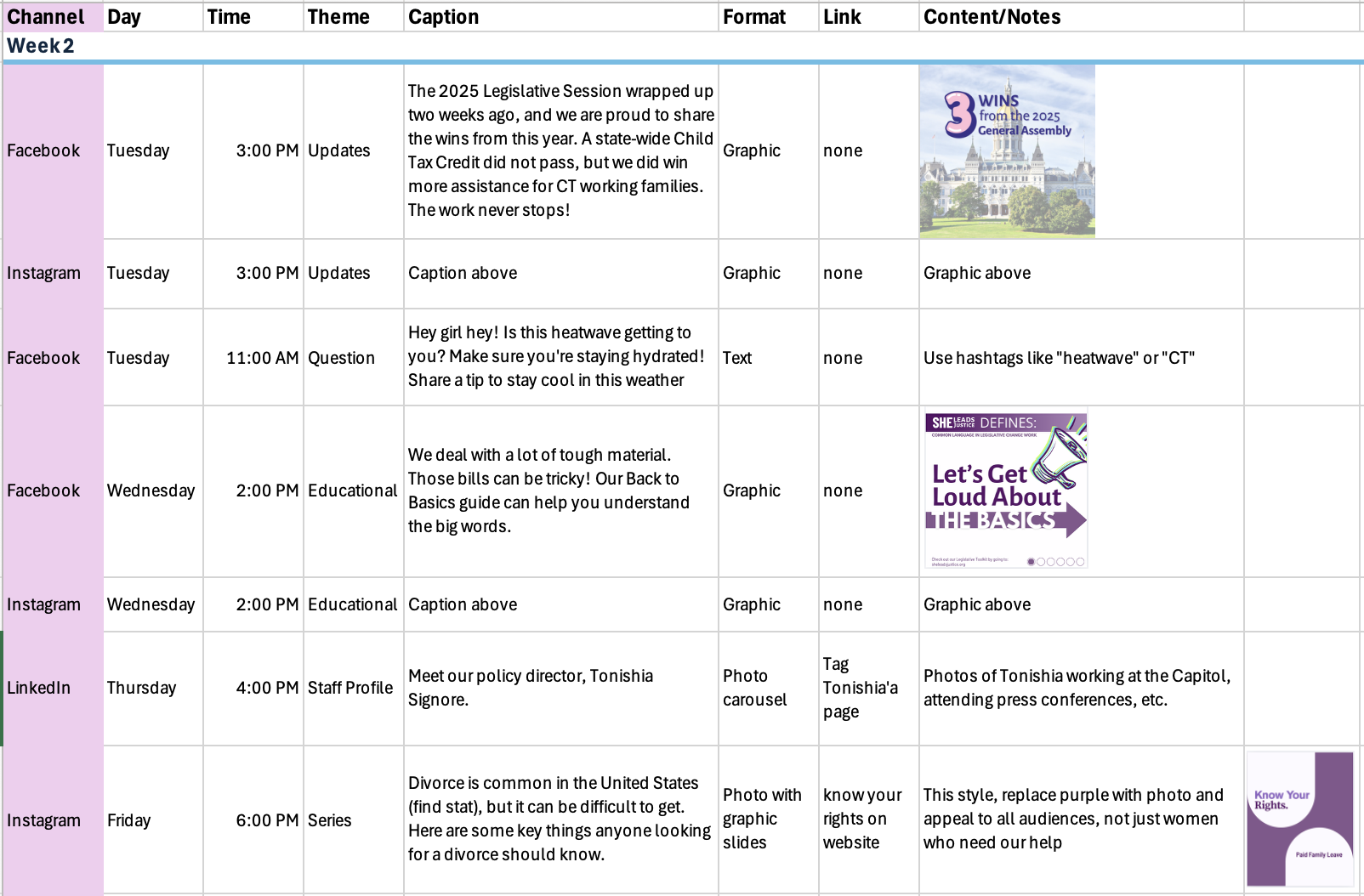
This is a very basic content calendar that I made when I was first posting on social media for a nonprofit. I could refer back to it to see what was coming up and when I needed to make another type of content.
How to Keep Your Content Consistent
Consistency matters more than volume: posting frequently without a strategy simply signals that a creator needed something to fill space rather than genuinely serve their audience. Quality posts resonate far more than a flood of mediocre ones. Popular platforms like Instagram, LinkedIn, and TikTok each have recommended posting frequencies worth following as a baseline. Sprout Social reports that the best times to post on social media are generally Tuesdays through Thursdays, between 10 a.m. and 5 p.m., with variations by platform.
A realistic and sustainable schedule will always outperform an ambitious one that leads to burnout. This applies to platform selection, too. Show up where your audience actually is rather than trying to maintain an active presence everywhere.
Platforms and Tools to Build Your Content Calendar
There are many tools available for building a content calendar, from free beginner friendly options to more advanced platforms for experienced professionals.
Canva and Google Sheets are great starting points; both are free, easy to use, and allow you to customize columns, add drop-downs, and attach files without feeling overwhelmed. In fact, HubSpot offers free editorial calendar templates built for Microsoft Excel and Google Sheets. Trello is ideal for visual thinkers and small teams, while Notion is perfect for content strategists who want a fully customizable workspace.
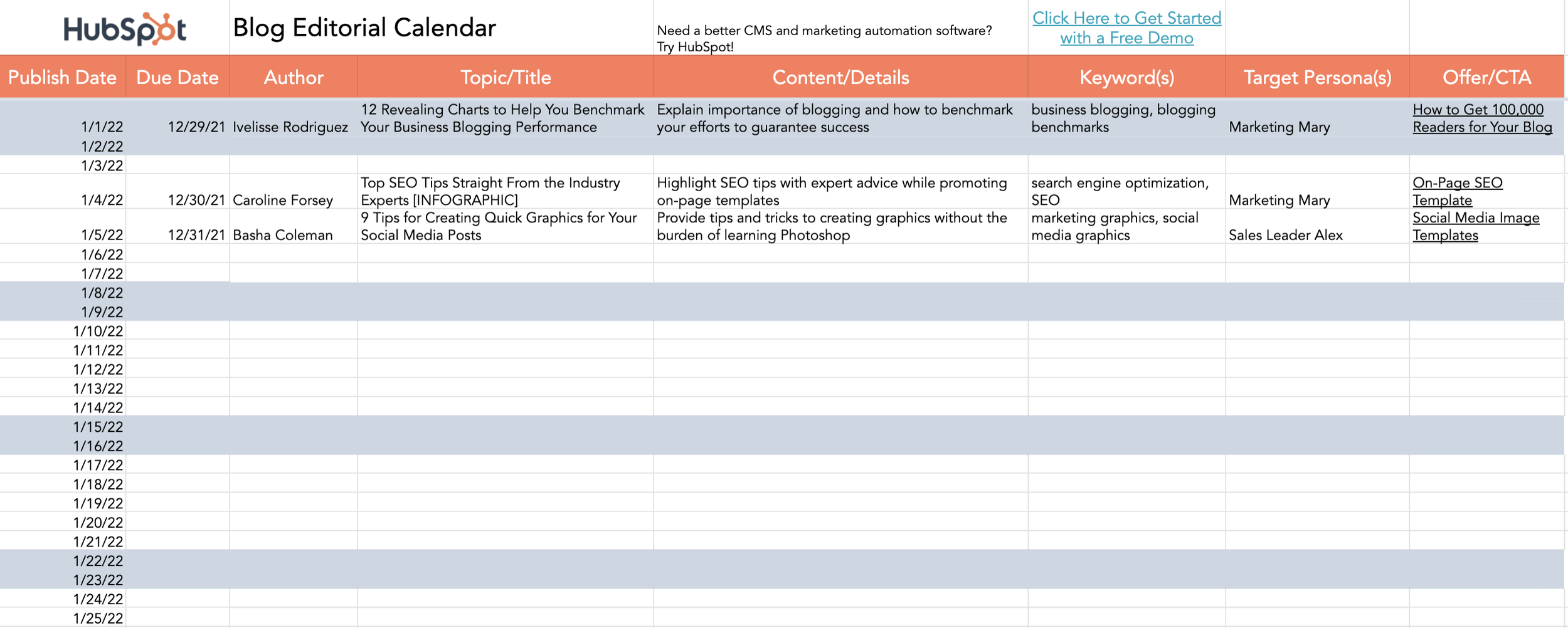
This is a screenshot of the free editorial content calendar that creators and businesses can download to start.
The most important thing is choosing a tool that fits your workflow and reduces stress rather than adding to it. The best tool is simply the one you will actually use!
How to Organize Your Content Calendar
There are some key columns and categories that every content calendar should have. Your calendar should have the date, platform, content type, caption, visuals, and status. Status is particularly important if you are working with a team or need to track the status as the post gets approval.
You can also organize content by content pillars or themes to keep messaging aligned with brand strategy.
When using a content calendar, you should schedule content at least two to four weeks in advance to avoid last minute scrambling. Two to four weeks isn’t a rule, and larger businesses often spend much longer than that. Do what makes sense for your capabilities.
How to Stay on Top of Your Posting Schedule
Building a content calendar is only half the battle. Staying consistent and accountable to it is where the real work happens. Batch creating your content once a week or month ensures you are never scrambling at the last minute. Scheduling tools like Hootsuite and Later allow you to automate posting so content goes live even on your busiest days.
Set a weekly reminder to review your calendar, check upcoming posts, and adjust as needed. Remember, a content calendar is a living document that should grow and evolve alongside your strategy.
Conclusion
A content calendar is one of the simplest yet most powerful tools in any marketer’s arsenal! With the right platform, a realistic posting schedule, and a commitment to consistency, you will save time, reduce stress, and show up for your audience strategically every single week.

Nice to meet you! I’m Erin Russell.
I love to talk, and that’s why I chose communications. I get to talk to people across the world through different forms of media.
My people skills are my superpower. Need someone to draft your next professional email, represent your company at an event, and lead teams into strategy-driven campaigns? I’m your gal.
Let’s talk more!
